A portable cooler or fridge-freezer is designed for use in a campervan, caravan, boat, car, or off-grid setup. Power consumption is usually limited, but it heavily depends on the model, the set temperature, and the conditions in which you use the cooler.
In this article, we explain how much electricity a portable cooler consumes, how to calculate its operating time on a battery, and how to reduce energy consumption.
Does a portable cooler consume a lot of power?
A modern compressor cooler typically uses little electricity. The compressor does not run continuously. Once the set temperature is reached, it temporarily switches off. Only when the temperature rises again does the compressor restart.
The stated power is usually expressed in watts. The actual energy consumption is expressed in watt-hours.
The calculation is:
Energy consumption in Wh = power in W × operating time in hours
A cooler that uses an average of 50 watts for ten hours consumes:
50 W × 10 hours = 500 Wh
With a compressor cooler, the compressor usually only runs for part of the time. Therefore, the average daily consumption is often lower than a calculation based on continuous use.
What factors determine power consumption?
The energy consumption of a portable cooler is influenced by several factors.
Ambient temperature
In warm weather, the compressor has to switch on more often to maintain the set temperature. A cooler in a hot car therefore consumes more power than a cooler in a cool, well-ventilated place.
Set temperature
Freezing requires more energy than cooling. A cooler set to -18 °C generally consumes more power than the same model at 4 °C.
Insulation
Good insulation limits heat loss. This keeps the temperature stable longer and means the compressor has to run less often.
Lid usage
Every time you open the lid, warm air enters. Frequent opening increases energy consumption.
Amount of contents
A well-filled cooler usually maintains its temperature better. Cooled products together form a thermal mass, which means the compressor has to switch on less often.
Why are compressor coolers energy-efficient?
Modern portable coolers use various techniques to limit power consumption.
The compressor operates in cycles and only runs when cooling is needed. Thick insulation keeps cold air in and limits the influence of the outside temperature. Efficient compressors also provide sufficient cooling capacity with relatively low power consumption.
A model like the TF-Xtreme 50 uses an average of about 35 watts according to the product specifications. The actual consumption depends on the temperature setting and operating conditions.
How long does a cooler run on a leisure battery?
To calculate the operating time, you need two values:
-
The average energy consumption of the cooler
-
The usable capacity of the battery
In a 12V system, you can convert watts to amperes with this formula:
Amperes = watts ÷ volts
A cooler with an average power of 35 watts uses at 12 volts:
35 W ÷ 12 V = approximately 2.9 A
When the compressor runs for eight hours spread over a day, the daily consumption is:
2.9 A × 8 hours = approximately 23.3 Ah
A battery must therefore provide at least 23.3 Ah of usable capacity to operate this cooler for one day under these conditions.
Calculation example with the Totalfreeze 45
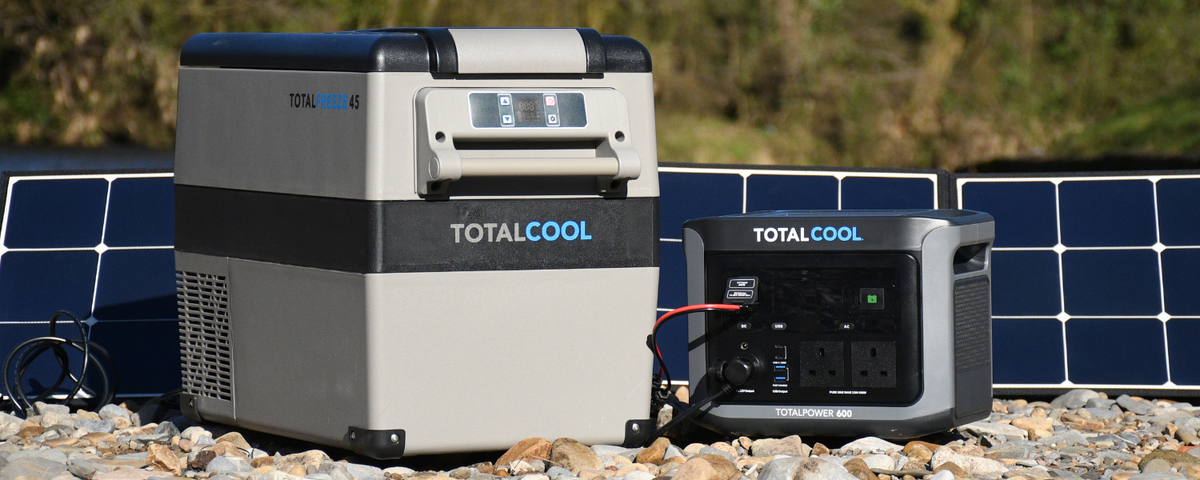
The Totalfreeze 45 uses an average of about 35 watts. If the compressor runs for a total of eight hours a day, the daily energy consumption is:
35 W × 8 hours = 280 Wh
Converted to ampere-hours at 12 volts:
280 Wh ÷ 12 V = approximately 23.3 Ah
The Totalpower 600 has a stated capacity of 499 Wh. The theoretical operating time is then:
499 Wh ÷ 280 Wh per day = approximately 1.78 days
In practice, the operating time will usually be slightly shorter. Energy is lost when converting power, and a power station switches off before the full battery capacity is usable. Warm weather, freezing, and frequent opening also increase consumption.
Check out the Totalpower portable power stations for mobile power during camping, boating, and travel.
How to calculate the operating time yourself?
First, check the power of the cooler in watts or the current consumption in amperes. Then determine how many hours per day the compressor is expected to be active.
Then calculate the daily consumption in watt-hours:
Power × active operating time = daily consumption
Then divide the usable battery capacity by the daily consumption:
Battery capacity in Wh ÷ daily consumption in Wh = operating time in days
Preferably use the usable battery capacity and not just the advertised capacity. For lead-acid batteries, often only a portion of the total capacity is available without damaging the battery. Lithium batteries generally offer a larger usable percentage.
How to reduce your cooler's power consumption
Place the cooler in the shade
Direct sunlight heats the housing and causes the compressor to run more often. Preferably place the cooler in a cool, ventilated spot.
Pre-cool products
Where possible, place already cooled products in the cooler. Cooling down warm groceries requires extra energy.
Open the lid as briefly as possible
Determine what you need beforehand and close the lid immediately. This helps retain the cold air better.
Keep the cooler sufficiently filled
A filled cooler stays cold longer. If the cooler is largely empty, fill the free space with chilled water bottles or ice packs.
Ensure adequate ventilation
Do not block the ventilation openings around the compressor. Poor ventilation reduces efficiency and can cause overheating.
Use an insulation cover
A suitable insulation cover reduces the influence of heat and sunlight. This can make a difference, especially during warm summer days.
Choose a realistic temperature
For chilled food, a temperature of about 4 °C is usually sufficient. Only set the cooler to freezer mode when absolutely necessary.
Using a portable cooler with solar panels
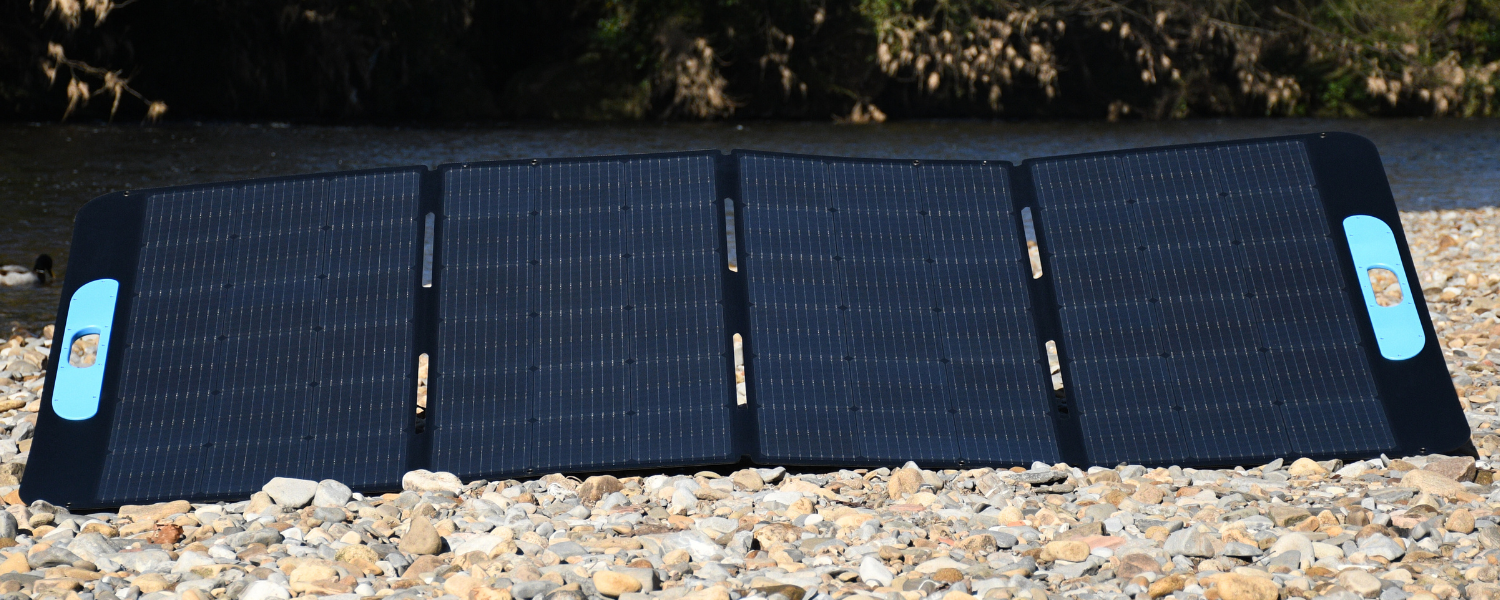
A cooler can be well combined with a portable solar panel and a battery or power station. During the day, the solar panel supplies energy, while the battery powers the cooler even at night.
Check that the daily output of the solar panel is at least equal to the average daily consumption of the cooler. Take into account clouds, shade, season, and conversion loss.
Conclusion
Portable coolers generally use little electricity thanks to efficient compressors, good insulation, and an automatic on-off cycle. Under favorable conditions, a compressor cooler can operate for several days on a leisure battery or portable power station.
The actual operating time is determined by battery capacity, ambient temperature, temperature setting, and frequency of use. By placing the cooler in the shade, using pre-cooled products, and opening the lid as little as possible, you reduce energy consumption.
View the range of Totalcool portable coolers and compare capacity, dimensions, and power connections.